
The Webster Technique: Supporting Your Changing Body During Pregnancy

With one of our Prenatal Chiropractors, Dr. Mallory
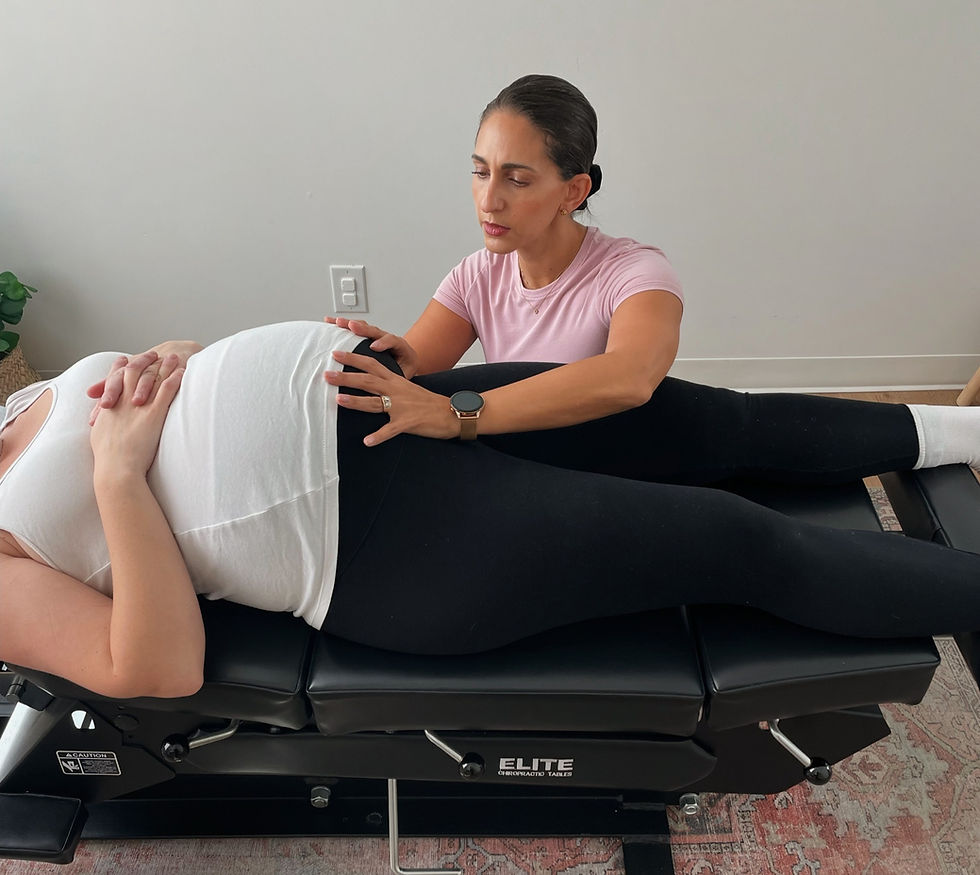
Pregnancy is a lot of things — exciting, amazing, occasionally uncomfortable, and a pretty impressive feat of human engineering. As your baby grows, your centre of gravity shifts, your posture changes, your joints and ligaments adapt, and the muscles surrounding your pelvis take on new demands. Your body is constantly adjusting to make room for your growing baby.
Sometimes, those adaptations feel pretty good.
Sometimes, they feel like “Why does my hip hurt when I roll over in bed?” or “How did putting on my pants become a full-body workout?”
That’s where prenatal chiropractic care can come in.
At Frame Fidelity, we use a whole-body approach to pregnancy care, looking at how your spine, pelvis, hips, muscles and movement are working together. The Webster Technique is one tool we may use to support pelvic function and help your body navigate the physical changes of pregnancy.
So, What Exactly Is the Webster Technique?
The Webster Technique is a specific chiropractic technique designed to assess and address the biomechanics of the pelvis during pregnancy. Chiropractors who are Webster certified receive additional training through the International Chiropractic Pediatric Association (ICPA) in assessing the sacrum, pelvis, and surrounding soft tissues. As pregnancy progresses, your weight distribution, posture, movement patterns and ligament tension naturally change. Your pelvis has an important job to do during all of this — supporting your growing uterus while continuing to help you walk, exercise, sit, stand, sleep and generally get through your day.
Webster care focuses on the structures around the pelvis, including the sacrum and surrounding muscles and ligaments. Depending on what your body needs, treatment may include gentle chiropractic adjustments and soft tissue techniques.
The goal?
To support comfortable movement and balanced pelvic biomechanics while your body does what it was designed to do: adapt.
And because no two pregnancies — or bodies — are exactly alike, Webster Technique isn't a one-size-fits-all treatment.
Does the Webster Technique Turn a Breech Baby?
This is probably the question we hear most often. The short answer is: No.
The Webster Technique is not a technique for manually turning a baby, and a chiropractor does not physically move or “flip” your baby during treatment.
Instead, Webster care focuses on the pregnant person's body.
Your uterus is supported within your pelvis by muscles, ligaments, and surrounding structures. As pregnancy progresses, changes in the pelvis and surrounding tissues can contribute to areas of tension or altered movement.
Webster care aims to address those areas and support pelvic and sacral function.
So, if your baby is breech, the goal of Webster care isn't to force your baby into a particular position. Rather, it is about supporting your body and creating as much comfortable movement and balance as possible within the pelvis.
Some people choose Webster-certified chiropractic care when their baby is breech or in another position later in pregnancy. It can be one part of a broader approach to care — but it should always complement, rather than replace, appropriate care from your midwife, obstetrician or other prenatal healthcare provider.
Why Does Your Pelvis Matter So Much During Pregnancy?
Your pelvis is doing some serious heavy lifting during pregnancy. It helps support your growing uterus, transfers forces between your upper and lower body, and works together with your hips, spine, pelvic floor and surrounding muscles every time you move.
As the physical demands of pregnancy increase, you may notice:
Low back discomfort
Pelvic girdle or pubic symphysis discomfort
Hip or gluteal tension
Sacroiliac joint discomfort
Difficulty getting comfortable in bed
Discomfort while walking or exercising
Pain or stiffness when changing positions
Increased tension through your hips, low back or pelvis
But here's an important reminder from your Frame Fidelity team:
You don't have to be in pain to benefit from prenatal chiropractic care.
Some people come in because something hurts. Others come because they want help staying mobile, active, and comfortable as their body changes.
Both are completely valid.
How Can Prenatal Chiropractic Care Help?
At Frame Fidelity, we don't believe in chasing symptoms one body part at a time.
Your hip doesn't exist in isolation. Neither does your pelvis, low back or rib cage. Pregnancy changes the way your whole body moves, so we want to understand the bigger picture.
Your prenatal chiropractic appointment is individualized based on things like:
How far along you are
How you're feeling
Your health and pregnancy history
Your activity level
Your movement patterns
Your goals for pregnancy, birth and postpartum
Depending on what you need, your visit may include gentle chiropractic adjustments, soft tissue therapy, mobility work, exercise recommendations and/or Webster Technique.
We may work with your low back, pelvis, hips, mid-back or surrounding muscles — not because anything is necessarily “out of place,” but because your body is adapting to a constantly changing set of demands. And yes, we modify your positioning and our treatment approach as your belly grows. Your comfort matters.
Do You Need Chiropractic Care Throughout Your Whole Pregnancy?
There's no magic number of appointments or specific schedule that every pregnant person needs.
Some people see us regularly throughout pregnancy. Others come in when something starts bothering them. Some continue care because they want ongoing support as their body changes.
The important thing is that your care changes with you.
What your body needs at 20 weeks may be completely different from what it needs at 32 or 38 weeks. Regular visits allow us to reassess what's changing and adjust your care accordingly.
Prenatal chiropractic care may help support:
Comfortable movement as your belly grows
Pelvic, hip and spinal mobility
Management of pregnancy-related aches and tension
Adaptation to changing posture and biomechanics
Continued participation in appropriate exercise and daily activities
Preparation for the physical demands of labour and birth
Your transition into postpartum recovery
Our goal is to give you tools you can take with you — movement strategies, exercises, education and simple changes that can help you feel more confident in your changing body.
When Should You Start Webster Technique?
There isn't one “right” week to start.
Some people begin chiropractic care early in pregnancy because they were already receiving care or want support staying active and comfortable.
Others come in during the second or third trimester when their body starts feeling very different. And some people discover the Webster Technique after finding out their baby is breech.
There's no need to wait until something is wrong.
If you're curious about prenatal chiropractic care, that's reason enough to come in and have a conversation about what your body needs right now.
Pregnancy Is an Adaptation. Your Care Should Be Too.
At Frame Fidelity, we love the adaptations that life in a body can bring — and pregnancy is perhaps one of the biggest adaptations of all.
Your body is changing every week. Your centre of gravity is shifting. Your joints and muscles are adapting. Your baby is growing. And somehow, you're still expected to function like a regular human being. We get it.
Our prenatal chiropractic care is designed to meet you where you are, whether you're dealing with pelvic or low back discomfort, trying to stay active, wondering about Webster Technique, navigating a breech presentation, or simply looking for some extra support as pregnancy progresses.
As Webster-certified chiropractors with a focus on perinatal and family care, we look at the whole picture — not just the spot that hurts. Pregnancy care isn't about “fixing” a pregnant body. It's about supporting a body that's doing something pretty incredible.
Curious whether prenatal chiropractic care or Webster Technique is right for you?
Book an assessment and let's talk about it! We will chat about what's going on, assess how you're moving, answer your questions and create a care plan that makes sense for your body, your pregnancy and your goals.
Your body is changing. Your care should change with it.
Dr. Mallory Samuels, D.C.


Comments